Scalp Micropigmentation for Pre/Post Hair Transplant
Skalp® delivers a pioneering cosmetic treatment that enhances the visual result of your hair transplant. The procedure suits both FUT and FUE patients, whether pre-op or post-op.
During Scalp Micropigmentation, we replicate thousands of natural-looking hair follicles by precisely placing pigment into the scalp with a fine needle. As we reduce scalp visibility, your hair immediately appears thicker and fuller.
We complete the treatment over three sessions. First, we apply a lighter shade to establish the base. Next, we refine the tone and increase density in sessions two and three. This step-by-step approach ensures a seamless colour match and a natural blend with your existing hair.
Most clients choose Scalp Micropigmentation after a transplant because surgery alone rarely delivers the density they expect. However, unlike a transplant, we don’t rely on limited donor grafts. Instead, we can replicate as many follicles as needed to achieve your desired look.
Density Treatment
Here is an example of a Scalp Micropigmentation density treatment where we camouflaged the scalp giving a more full and even appearance.
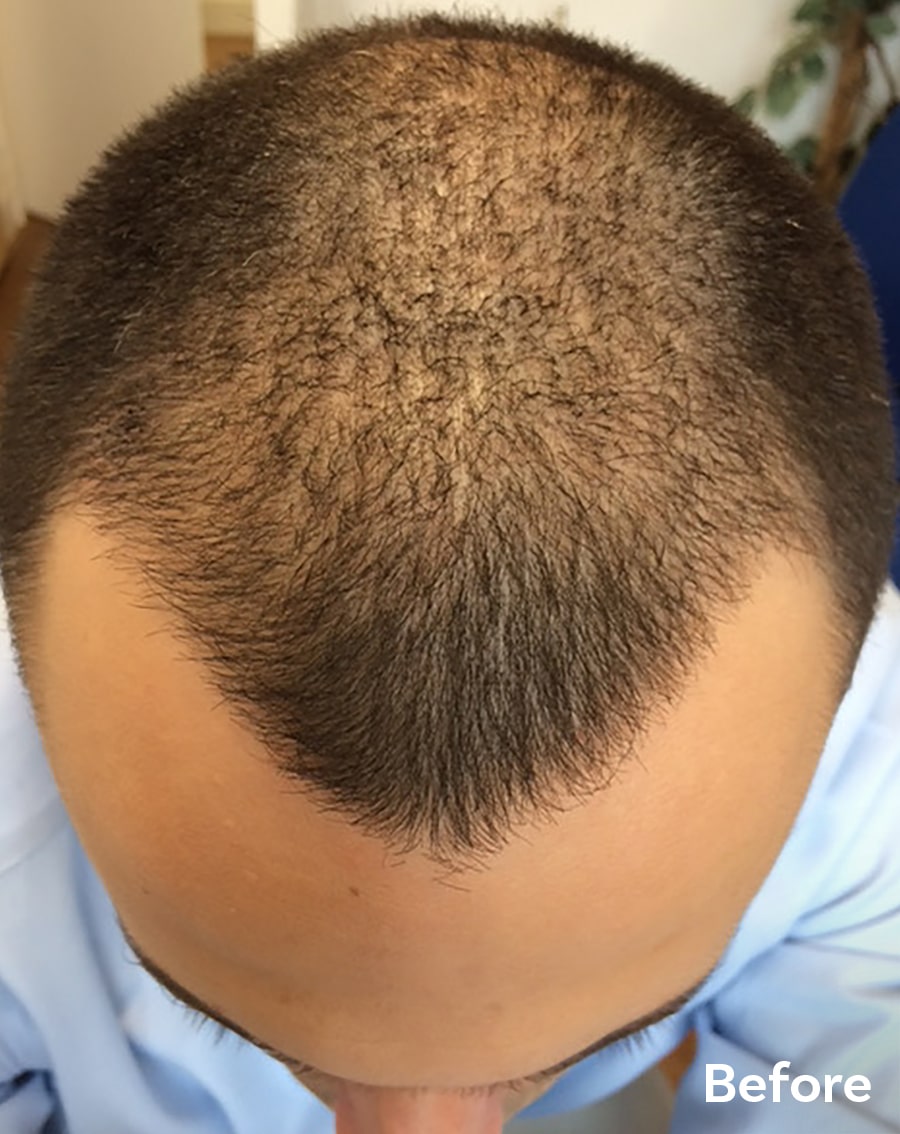
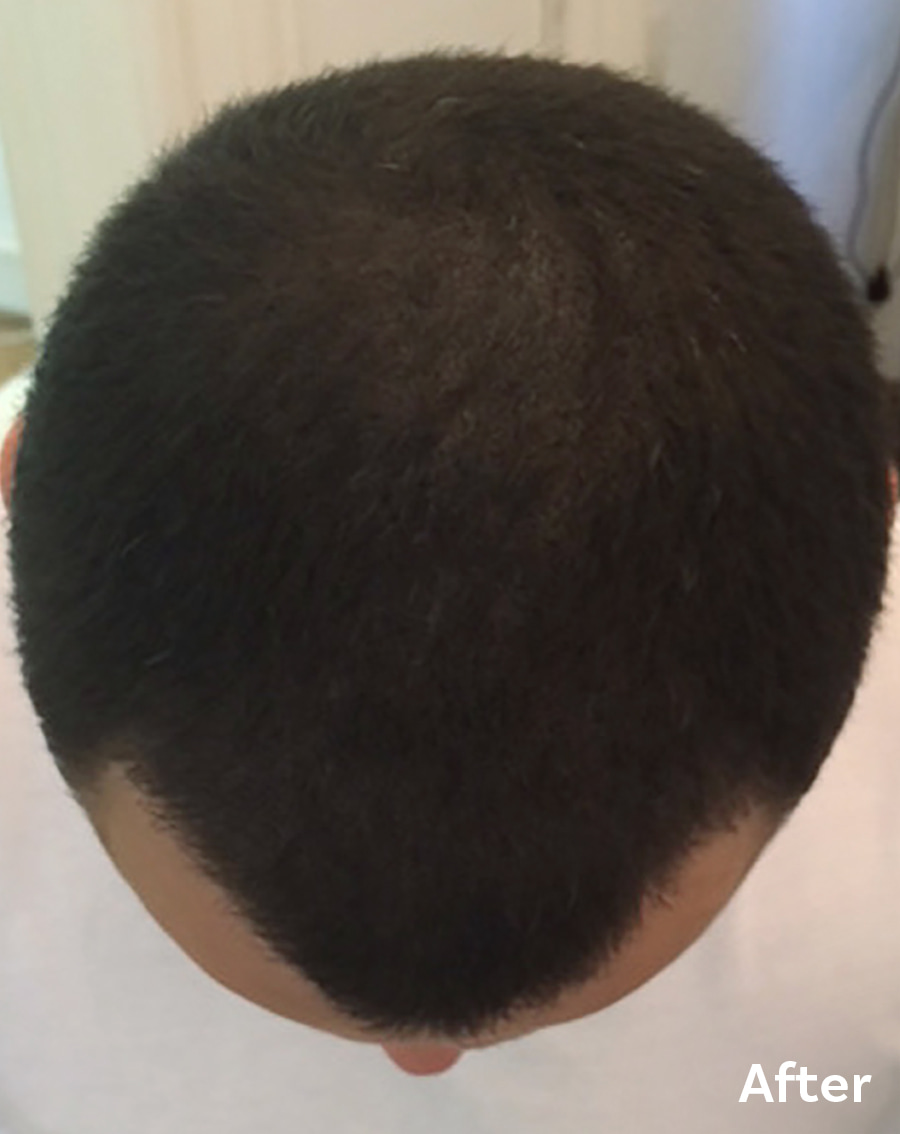
If you’ve already had a hair transplant, Scalp Micropigmentation helps you improve the overall result. We camouflage transplant scars and fill in areas where your hair still looks thin. As a result, your scalp appears denser and more consistent.
If you plan to have SMP before a transplant, schedule your treatment at least four weeks in advance. This timing allows the pigment to fully settle before your surgery.
Hair Transplant Scars
Many clients don’t just worry about density after a hair transplant. They worry about the scars—sometimes large ones—left on the back of the head. As a result, they often keep their hair longer than they’d like just to cover them.
Scalp Micropigmentation offers the most effective way to camouflage transplant scars. We use the same precise technique on the scar tissue as we do on the rest of the scalp. First, we apply a lighter layer to create a base. Then, over two more sessions, we build colour and density to blend the area naturally.
By carefully matching tone and follicle size, we make the scars far less noticeable. This approach allows you to wear your hair as short as you like without drawing attention to the scarring.
Here is an example of a FUT scar that we camouflaged with Scalp Micropigmentation.
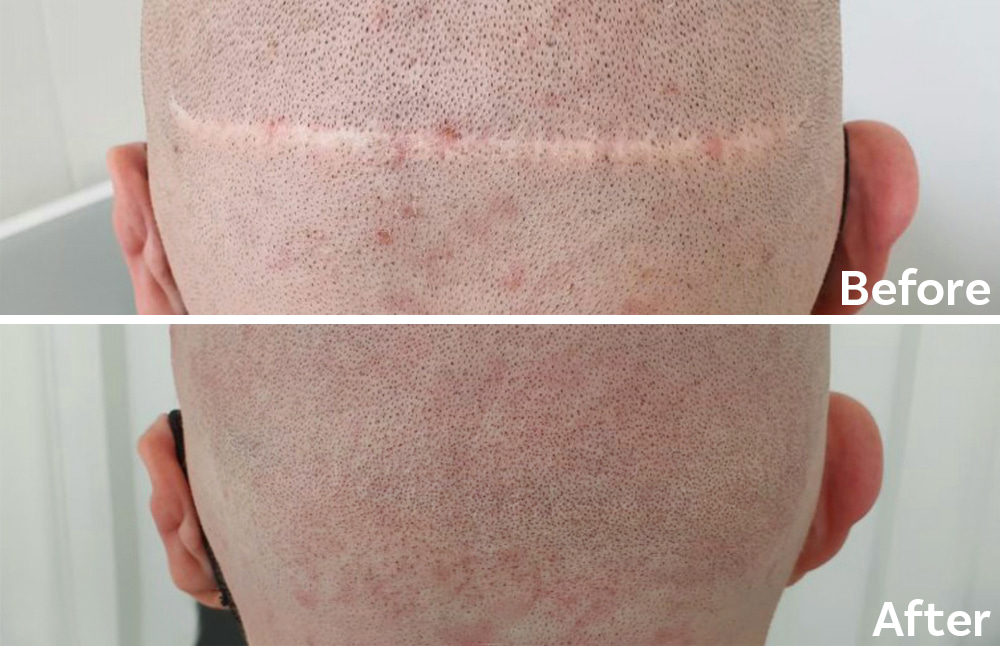
Here is an example of a client that had 3 FUT hair transplants and we helped camouflage with Scalp Micropigmentation.
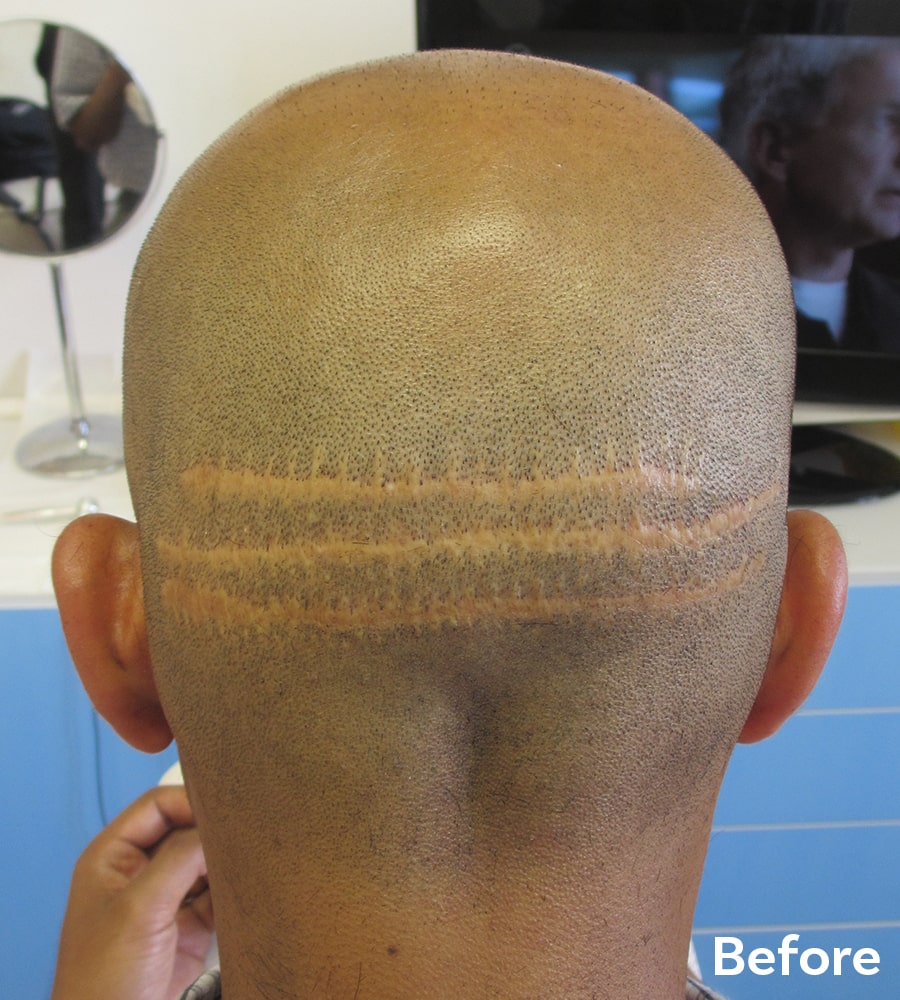
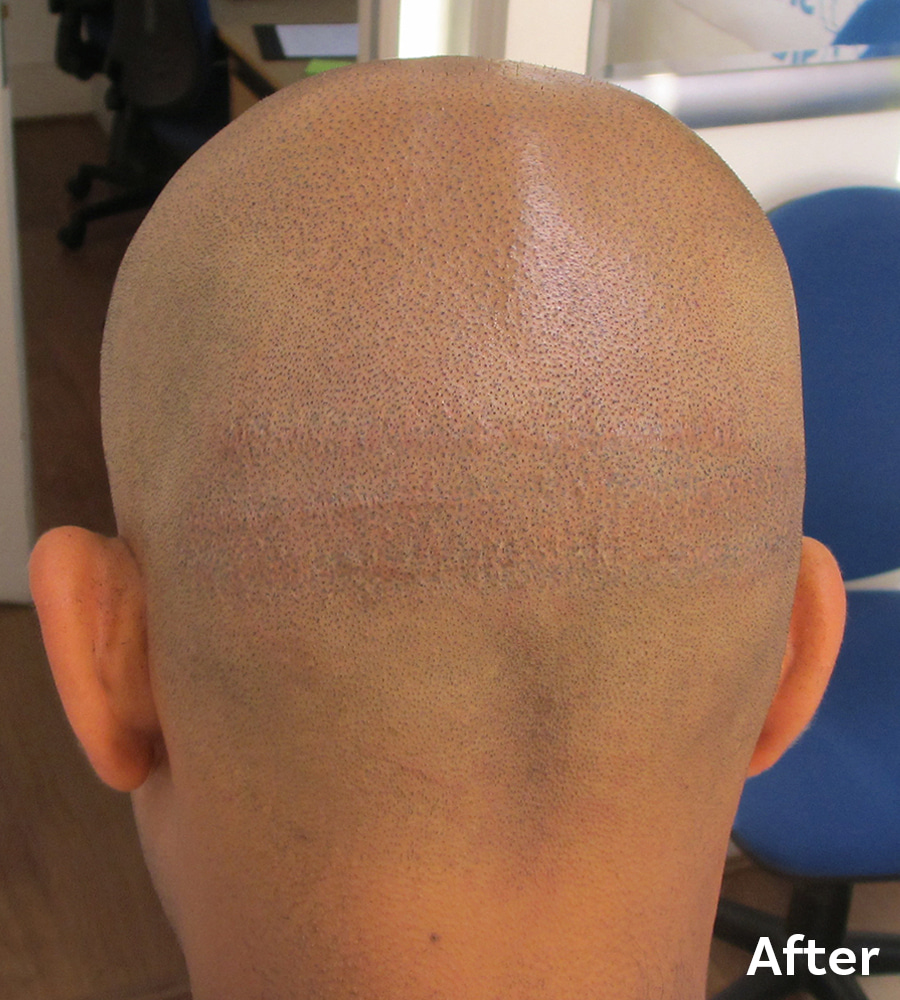
The after images were taken not long after the treatment session so still appears slightly red, the redness will disappear usually after just 24 hours.
Hair Transplants
A Hair transplant involves taking hair from one area, such as the back of the head and transplanting it to the area that is affected by hair loss. The two different methods used are follicular unit extraction (FUE) and follicular unit transplantation (FUT).
Follicular unit transplantation (FUT)
Strips of skin are taken from the donor area before dividing them into individual pieces. Cuts are then made in the scalp for the pieces to be placed into. This method can leave a large strip scar.
Follicular unit extraction (FUE)
A patient’s head is shaven and individual hair follicles are extracted from the donor area. These follicles are then placed into cuts in the transplant site. Scars with this method are less noticeable than FUT transplants and appear as individual dots.
If you do not have enough remaining hair to have our thickening effect treatment you should consider our shaved effect Scalp Micropigmentation. Click here for more information.
Why Skalp®?
Skalp has helped thousands of clients achieve the look of thicker, fuller hair after a hair transplant. We have also camouflaged thousands of transplant scars, which allows our clients to wear their hair as short as they like without worrying about visible scarring at the back of the head.
We work with hair transplant patients every day. In fact, nearly 50% of our clients have previously undergone a transplant, so we understand the challenges and expectations that come with it.